



Dr Bhavin Garara
HomeContact UsUHai — Analyse My Skin
Age Spots

Age Spots

Age spots — clinically solar lentigines, sometimes also called liver spots or sun spots — are flat, sharply defined brown marks that appear on chronically sun-exposed skin: the face, hands, and chest most commonly. They are benign clusters of pigment but can be cosmetically unwelcome. The clinic’s first job is to confirm that a “spot” is genuinely a lentigo and not a different lesion that needs medical assessment. Once confirmed, picosecond laser is usually the most effective treatment.

Medically reviewed by Dr Bhavin Garara, GMC 7155707 · Last reviewed: 6 March 2026

Age spots are usually benign, but some pigmented lesions can indicate skin cancer or other medical conditions. New, changing, asymmetric, raised, or otherwise unusual lesions should be assessed by a GP or dermatologist before aesthetic treatment. Dr Garara performs a clinical assessment to confirm that any spot is a benign lentigo before recommending laser; suspicious lesions are routed appropriately.

What it is

What Are Age Spots?

Book a Consultation

Solar lentigines are circumscribed brown spots caused by clusters of pigment-producing melanocytes responding to cumulative UV exposure. They sit mainly in the epidermis (close to the surface) but can extend deeper. They are usually flat, well-defined, light to dark brown, and 0.5–2cm across, though they can be smaller or larger. Multiple spots often appear together on chronically exposed areas.

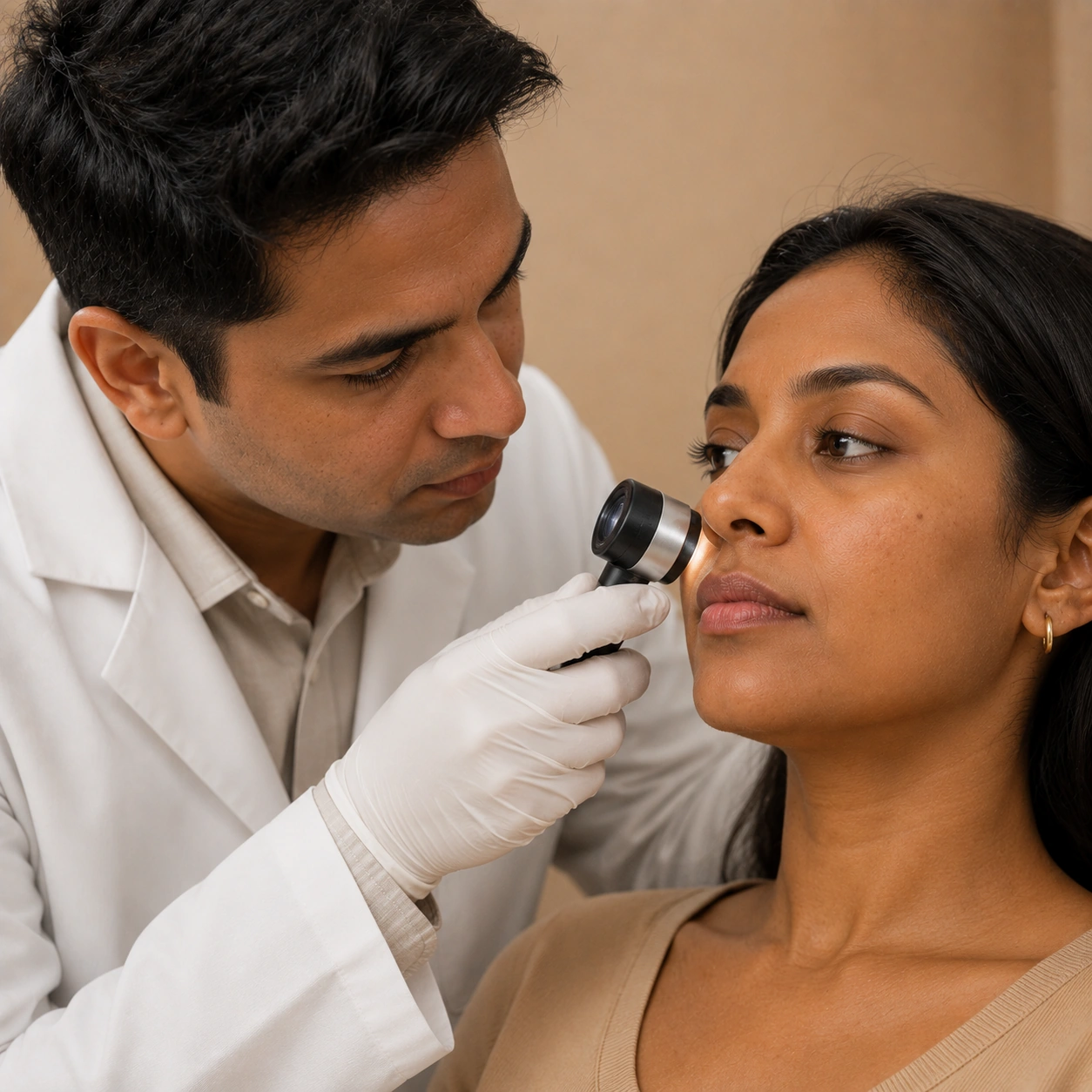
Dr Bhavin Garara’s approach is to confirm the diagnosis first — by clinical examination, supported by dermatoscopy where appropriate — and only then treat. The clinic does not treat lesions that warrant medical review without that review.

What causes it

What Causes Age Spots?

  1. 1

    Cumulative UV exposure

    The dominant cause. Spots appear on chronically exposed areas — face, hands, chest, forearms, shoulders.

  2. 2

    Skin type

    Lighter Fitzpatrick types show age spots earlier and more visibly.

  3. 3

    Age

    Cumulative exposure shows over decades; most patients notice age spots from their forties onwards.

  4. 4

    Family pattern

    Some families show characteristic age-spot patterns.

  5. 5

    Sunbed use

    Sunbeds accelerate the same UV damage that produces natural age spots.

Dr Bhavin Garara
Dr Bhavin Garara, MBBS, BMedSci, PGDip
Book a Consultation
Dr Garara's approach

How Dr Bhavin Garara Treats Age Spots

At the clinics in London, Dr Garara examines each spot at consultation — clinically and with dermatoscopy where appropriate — to confirm that it is a benign solar lentigo and not a lesion requiring medical review. Spots that warrant review are routed to GP / dermatology before treatment. Confirmed lentigines are typically treated with picosecond laser, with regenerative skin treatments added where the surrounding skin would benefit.
  • Anatomy-led assessmentTreatment plans built around your unique facial structure and movement.
  • Personalised planCombinations chosen for your skin, goals, and lifestyle — not a one-size-fits-all protocol.
  • Natural resultsA refreshed, well-rested version of you — never a frozen or over-treated look.

Prevention

Prevention

Prevention is more effective than treatment, and treatment without prevention is short-lived.

Prevention

Features

Treatment Options for Age Spots

Picosecond laser, cold ablative laser (selective), regenerative skin treatments, and a medical-grade topical regimen.

Picosecond laser (PicoSure Pro)

Picosecond laser (PicoSure Pro)

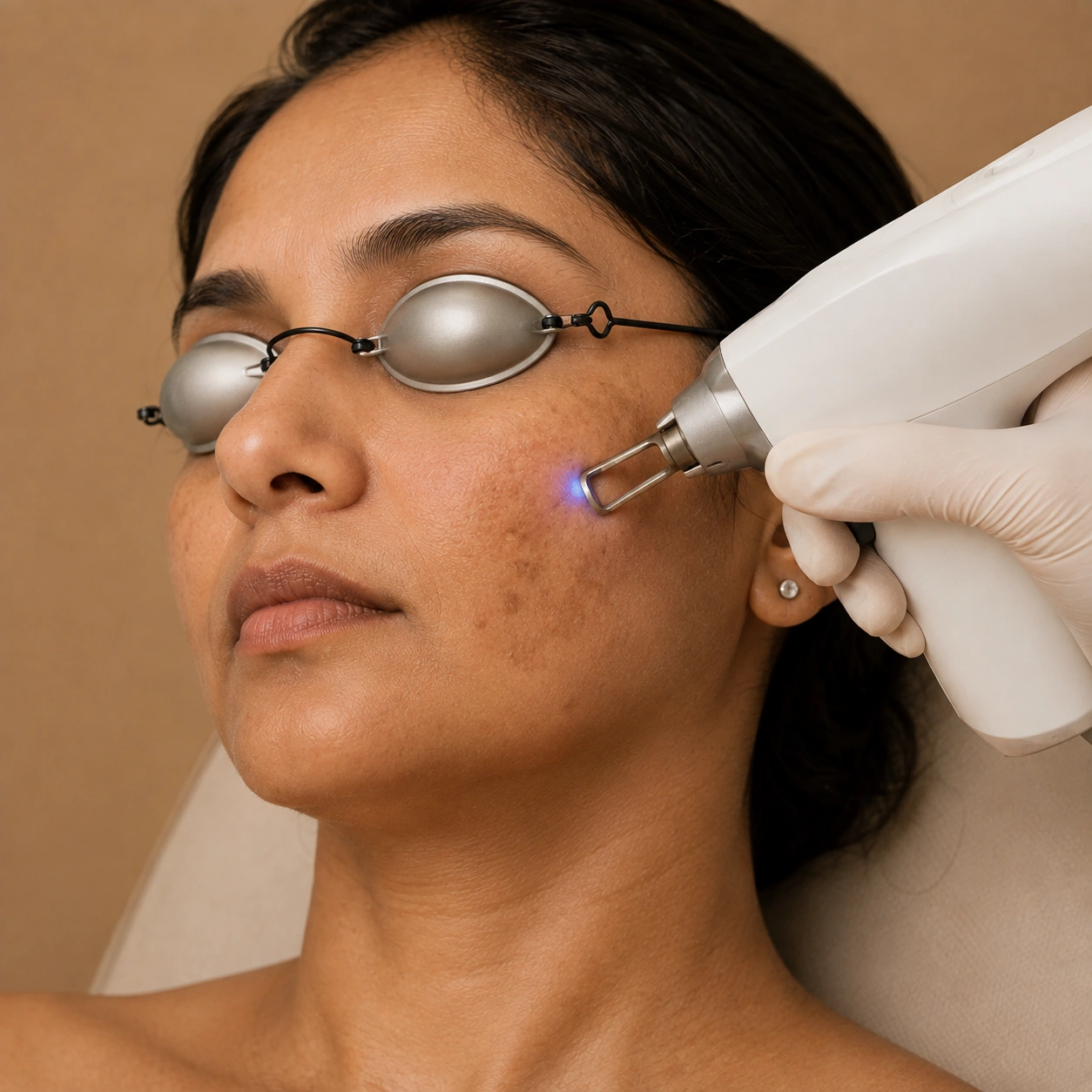
Very short pulses of light energy designed to break down melanin clusters with reduced thermal effect. After treatment the spot typically darkens briefly, then flakes off over several days.

See PicoSure Pro
Cold ablative laser (UltraClear) — selective

Cold ablative laser (UltraClear) — selective

For raised, stubborn, or texturally damaged spots that do not respond adequately to picosecond laser.

See UltraClear laser
Regenerative skin treatments

Regenerative skin treatments

Polynucleotides (Rejuran®), PDRN, and autologous PRP / platelet-derived exosomes support healing and can reduce post-treatment pigment risk in skin of colour.

Medical-grade topical regimen

Medical-grade topical regimen

Niacinamide, vitamin C, tranexamic acid, and gentle retinoids on the treated area help reduce the risk of new spots and post-inflammatory marks.

After confirming the lesion is a benign lentigo, picosecond laser is usually the first-line treatment, with cold ablative laser for raised or stubborn spots and regenerative support where the surrounding skin would benefit.

Picosecond laser (PicoSure Pro)

  • Best for: Confirmed benign solar lentigines
  • Downtime: 3–5 days of darkening / flaking
  • Lasts: Long-lasting for the treated spot with daily SPF

For discrete confirmed lentigines, PicoSure Pro delivers very short pulses of light energy designed to break down melanin clusters with reduced thermal effect. After treatment the spot typically darkens briefly (a frosted appearance), then over several days flakes away. Multiple sessions are occasionally needed for darker or deeper spots, but single-session clearance is common.

Cold ablative laser (UltraClear) — selective

  • Best for: Raised or texturally damaged lentigines
  • Downtime: 4–7 days of localised redness or peeling
  • Lasts: Long-lasting for the treated lesion

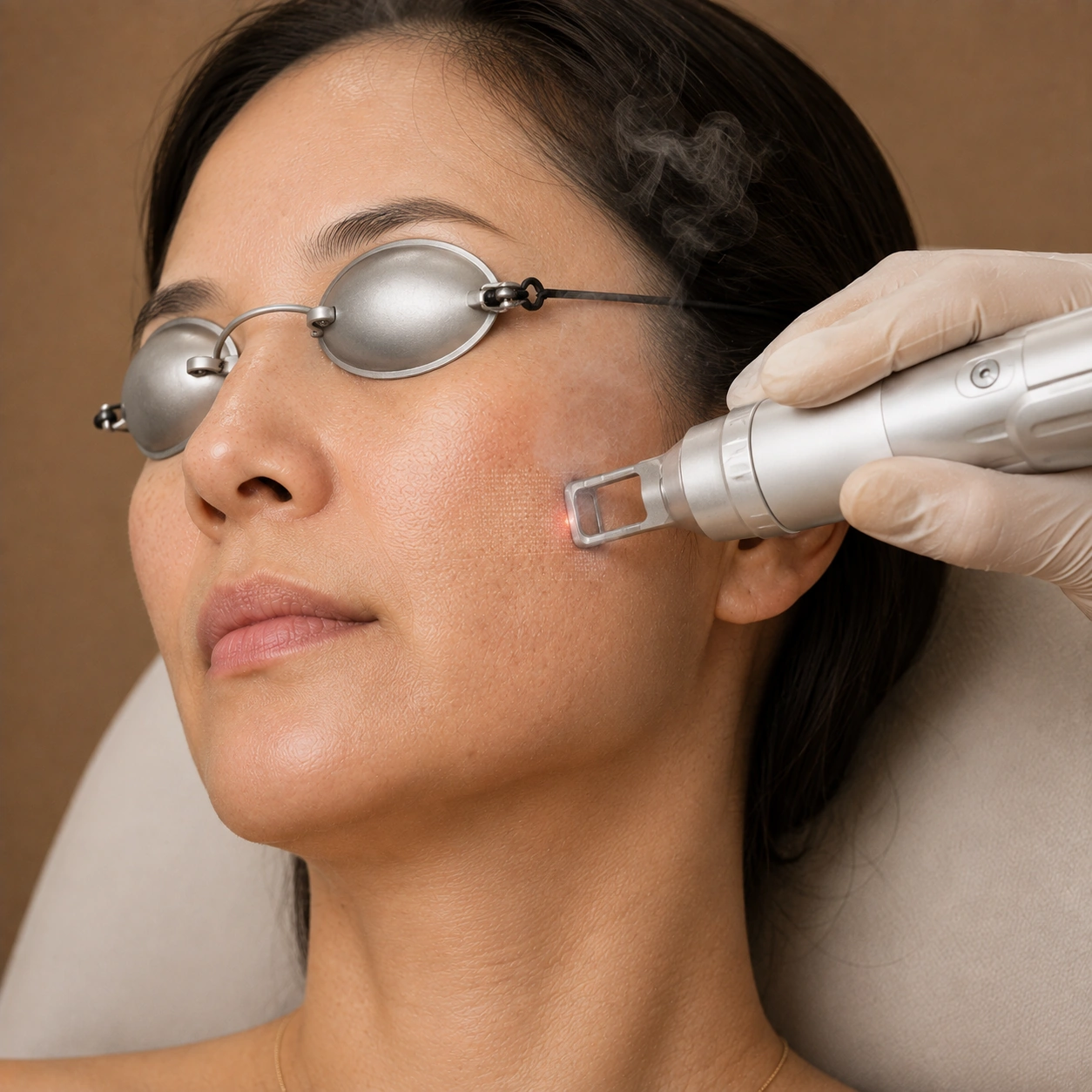
For raised, stubborn, or texturally damaged spots that do not respond adequately to picosecond laser, UltraClear (a 2910nm fibre laser marketed as a “cold ablative” fractional system) can resurface the area with localised downtime.

Regenerative skin treatments

  • Best for: Supporting healing; skin-of-colour protocols
  • Downtime: 1–2 days of mild bumps
  • Lasts: Around 6–12 months with a course

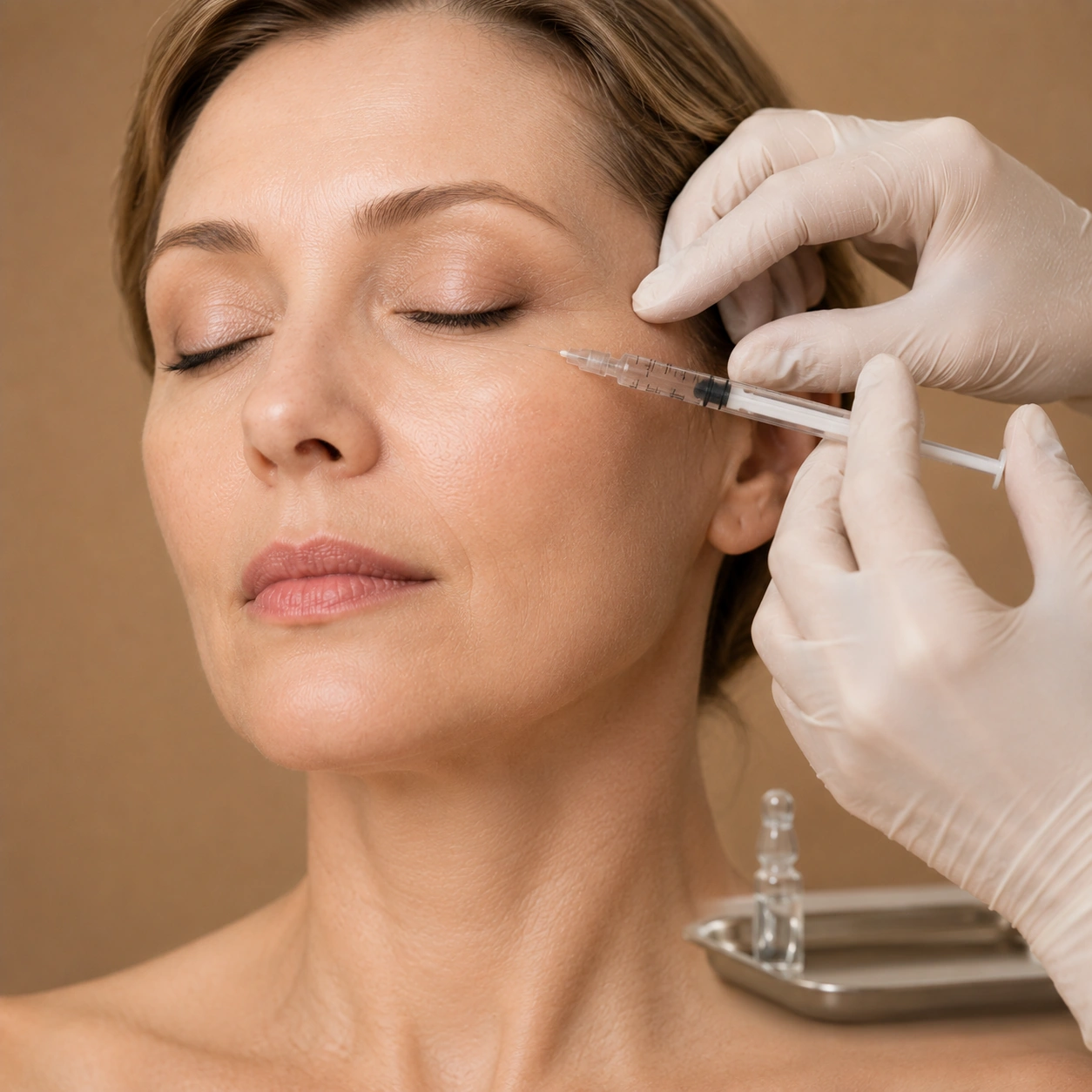
For supporting healing and reducing post-treatment pigment risk in skin of colour, polynucleotides (Rejuran®), PDRN, and autologous PRP / platelet-derived exosomes can be added.

Medical-grade topical regimen

  • Best for: Daily prevention and maintenance
  • Downtime: None
  • Lasts: Ongoing with consistent use

Niacinamide, vitamin C, tranexamic acid, and gentle retinoids on the treated area help reduce the risk of new spots and post-inflammatory marks.

Treatment for higher Fitzpatrick skin types (IV–VI) requires careful device selection and conservative settings to reduce the risk of post-inflammatory hyperpigmentation or, in some cases, keloid scarring. Dr Garara has particular experience in aesthetic medicine for skin of colour.

Considering treatment for age spots?

Book a consultation with Dr Bhavin Garara.

Book a Consultation
Compare at a glance

Treatments at a Glance

Picosecond laser

Best suited for
Confirmed benign solar lentigines
Typical downtime
3–5 days of darkening / flaking
How long results last
Long-lasting for the treated spot with daily SPF
What it does
Breaks down the spot’s melanin cluster

Cold ablative laser (selective)

Best suited for
Raised or texturally damaged lentigines
Typical downtime
4–7 days of localised redness or peeling
How long results last
Long-lasting for the treated lesion
What it does
Resurfaces the pigmented area

Regenerative skin treatments

Best suited for
Supporting healing; skin-of-colour protocols
Typical downtime
1–2 days of mild bumps
How long results last
Around 6–12 months with a course
What it does
Supports tissue quality

Medical-grade topical regimen

Best suited for
Daily prevention and maintenance
Typical downtime
None
How long results last
Ongoing with consistent use
What it does
Reduces new pigment formation

Downtime and duration figures are typical averages only. Individual results vary considerably. Dr Garara will give you a more personalised picture at consultation.

Safety & risk

Is Age Spot Treatment Safe?

Picosecond laser treatment of age spots is widely performed and generally well tolerated. Short-term effects include darkening, mild swelling, and the treated spot flaking off over several days. Risks include post-inflammatory pigment change (more common in skin of colour and managed by conservative settings) and, rarely, scarring or unintended pigmentary change. The most important safety consideration is to confirm the lesion is benign before treatment — laser does not “diagnose” lesions, and treating a suspicious lesion as a benign age spot would delay any necessary medical management.

We share this because patients deserve full information.
  • Qualified medical practitionerTreatment carried out by an experienced doctor with detailed anatomical training.
  • Reversal agents on handHyaluronidase and other complication-management tools are immediately available.
  • Full informed consentRisks, alternatives, and expected outcomes discussed in detail before any treatment.
Dr Bhavin Garara
Reviewed byDr Bhavin Garara

Frequently Asked Questions

Common questions about treating age spots.

Read next

Related Concerns

Age spots connect to other pigmentation concerns. You may also want to read about:

← All skin concerns

For an overview of all the facial concerns we treat, visit our Skin treatments hub.

Next step

Ready to take the next step?

Book a consultation with Dr Bhavin Garara.

Book a Consultation

Begin with a proper assessment.

Tell us a little about what you're looking for and we'll match you with the right consultation — at the clinic or virtually.

  • Your enquiry goes directly to Dr Bhavin's team.
  • We'll be in touch within one working day.
  • All consultations are strictly confidential.

This page is for general information and does not constitute medical advice. All treatments require a personal consultation. Suitability, risks, and expected outcomes will be discussed with you in detail before any treatment is carried out.